The entryway represents more than just a transitional space; it serves as the first impression of your home. A successful entryway harmonizes warmth with practicality, enabling it to welcome guests while meeting the daily needs of residents. Effective entryway decor ideas play a vital role in shaping an environment that fosters comfort and organization. By fostering an inviting atmosphere and providing necessary storage solutions, a well-designed entryway establishes a positive tone for the entire home. This article investigates innovative strategies to enhance your entryway, blending aesthetics and function seamlessly.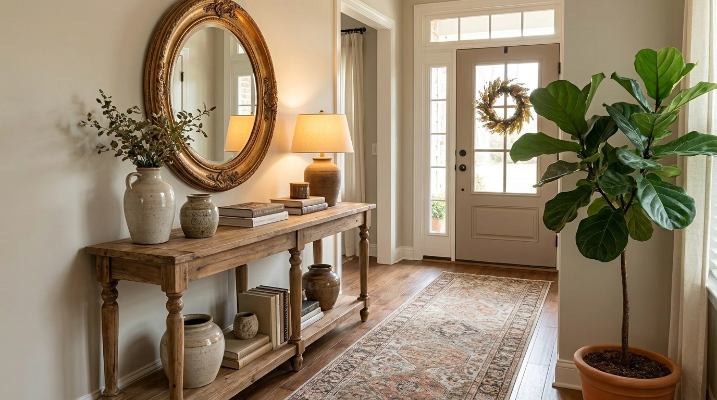
Entryway Design Principles: Creating a Functional and Welcoming Space
Creating an appealing entryway necessitates an understanding of fundamental design principles, including balance, harmony, and functionality. Balance refers to the visual distribution of elements such as furniture, artwork, and decor; achieving balance prevents individual pieces from overshadowing one another. For example, a large console table can be beautifully complemented with symmetrical wall art to create a unified look.
Harmony emphasizes the integration of diverse decor elements, wherein a consistent color scheme can significantly elevate the overall aesthetic of your entryway. The use of a complementary palette can create a visually pleasing environment that is inviting and engaging.
Critical to this design process is functionality; every entryway should facilitate ease of use for everyday activities. Incorporating practical storage solutions, like benches with hidden compartments, allows for organized spaces without compromising on style. Altogether, these principles work in unison to cultivate a warm and useful entryway that welcomes guests and smooths daily transitions into and out of the home.
Assessing Your Entryway Space and Planning Your Layout
To develop an entryway that is both inviting and practical, undertaking a thorough measurement and needs assessment is paramount. Begin by gauging the door swing and ensuring sufficient walking clearance. It is essential to allow a minimum of 36 inches for unobstructed access for an efficient flow in and out of the space.
Next, observe household traffic patterns during peak moments to analyze how family members move about the space; this supports creating an arrangement where furniture does not hinder movement. Storage needs also warrant consideration; compile a list of items like shoes, coats, bags, and mail. Depending on your household size and whether pets are present, functional storage solutions such as benches, hooks, and shelving may be necessary.
Don’t forget how weather influences your entryway's usability. Develop strategies for mitigating the impact of rain or snow with mud mats or umbrella stands. Finally, evaluate the entryway’s natural light source—adequate sunlight can significantly enhance the atmosphere, making it more inviting. Armed with this knowledge, you'll be empowered to tailor your entryway to suit both your functional requirements and aesthetic preferences.
Key Functional Areas Every Entryway Should Include
An effective entryway should feature three core functional zones to enhance organization and accessibility.
Drop Zones: These areas function as the initial point for placing items like bags, keys, or mail. A tabletop or a textured mat in this zone helps organize items effectively, contributing to a clutter-free environment while keeping essentials within easy reach.
Consoles and Benches: Adding consoles and benches can significantly enhance the style and utility of your entryway. A console table serves as a stylish display for decor while offering a handy surface for placing keys or bags. In contrast, a bench can provide seating to facilitate shoe removal while also accommodating hidden storage below, thereby maximizing usability.
Hooks and Storage Solutions: Integrating hooks offers a quick and convenient hang-up point for coats and bags, while both closed and open storage solutions can effectively accommodate shoes and accessories, ensuring a well-organized space. This multifaceted approach to functional zones symbolizes a well-thought-out entryway that beautifully balances style and practicality.
Entryway Decor Ideas Based on Function and Budget
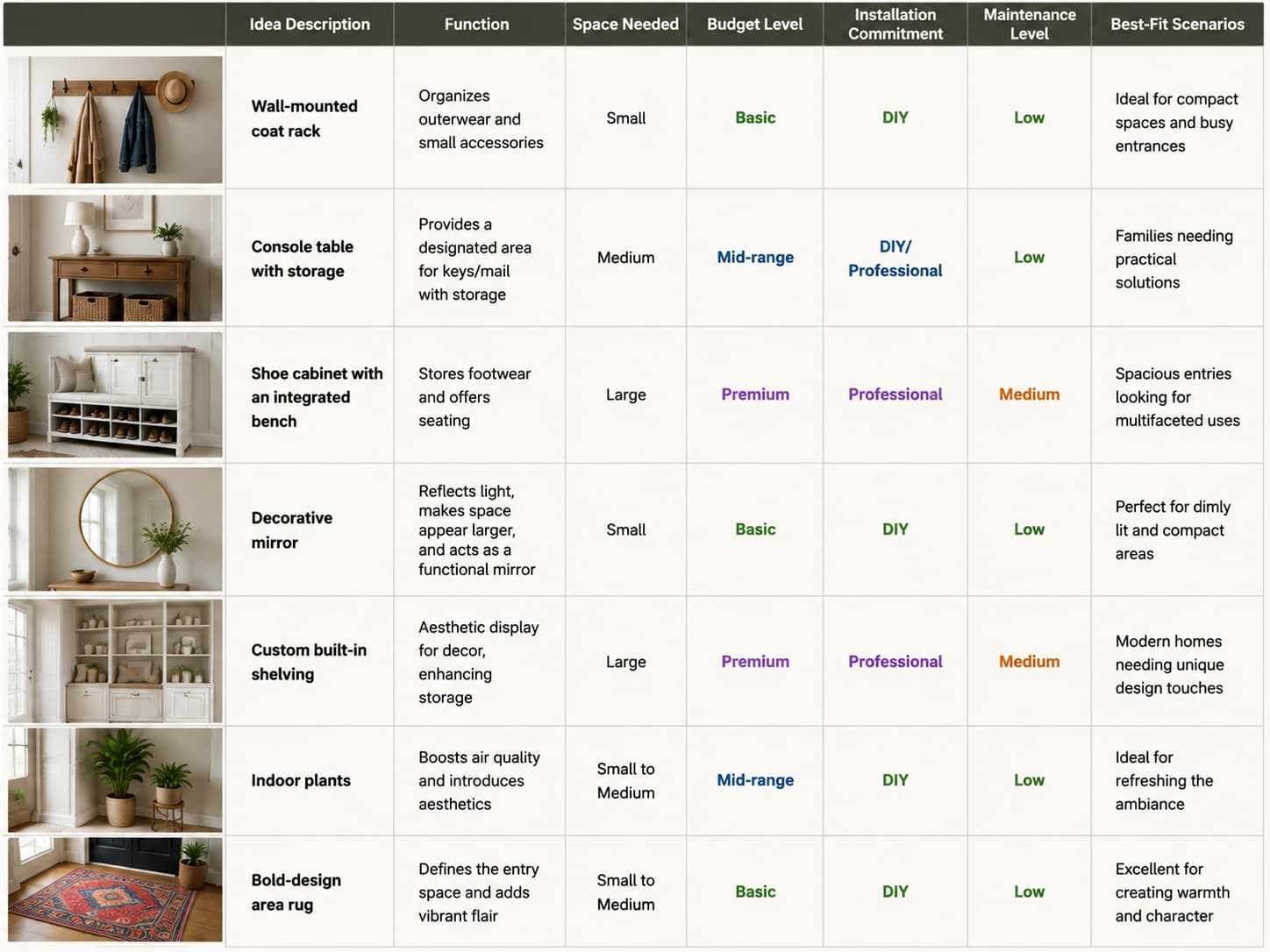
This matrix serves as a resource for those exploring various entryway decor ideas. Each entry helps guide informed decisions tailored to individual space, budget, and installation preferences, allowing readers to enhance their entryways effectively.
Functional Entryway Decor Ideas for a More Organized Space
When crafting a welcoming entryway, it is crucial to consider functional decor elements that enhance both aesthetics and practicality. Storage solutions like cabinets and baskets serve as indispensable for placing shoes, bags, and other everyday items, ensuring order in this high-traffic area. Seating options such as benches or poufs provide convenient spots for guests to sit while removing shoes or for residents to arrange their essentials.
Mirrors offer stylistic appeal while reflecting light, promoting a sense of openness, particularly in smaller spaces. Choosing durable and slip-resistant rug options can add warmth while bolstering safety for those entering or exiting the home.
Lighting is equally significant; overhead fixtures or wall sconces not only illuminate the entryway but also convey a welcoming mood. Final touches can be added with artwork and live plants, cultivating personal flair that enriches the overall atmosphere. Collectively, these decor elements redefine the entryway, transforming it into a beautifully functional area that emphasizes the importance of every arrival.
Entryway Design Ideas for Different Spaces and Needs
Designing entryways to accommodate various living arrangements requires a focus on practical use and visual appeal. For small or narrow configurations, explore vertical storage solutions, such as wall-mounted hooks for coats and key holders, to maximize space while ensuring organization. Homes lacking a defined foyer can benefit from clearly delineating the entry area using an area rug or a decorative console table that anchors the space, providing a place for essentials like mail or bags.
For renters seeking practical, non-permanent solutions, lightweight furniture and removable adhesive hooks can stylishly create a functional entryway without damaging walls or leaving a lasting impression. Families with children or those with accessibility needs should consider low-profile furniture and adaptive elements, like benches that serve dual purposes, ensuring everything remains within reach while maintaining visual flair.
In high-traffic locales, select long-lasting materials, like tile or laminate flooring, paired with a design layout that reduces clutter and ups utility—think built-in benches or shoe racks close to the entrance. Personalizing your entryway design to fit your scenario will enable you to create a warm and functional space that echoes the charm of your home’s aesthetic.
Creating a Cohesive and Practical Entryway That Lasts
To construct an inviting yet practical entryway, prioritize visual and functional cohesion and safety. Begin with anchoring furniture, especially tall pieces like coat racks or shelving, to avert tipping hazards. Establish a clear walking path by providing sufficient clearance for door swings and integrating accessibility features such as wide doorways and non-slip mats to enhance safety.
Seasonal durability is essential as well. Opt for weather-resistant materials in flooring and furniture that withstand humidity changes. Regularly monitor for signs of wear in high-traffic areas to extend the life of your investment. Multi-functional furnishings, such as storage benches, can maintain organization while also offering various uses. Seasonal maintenance, including cleaning and refreshing decor, sustains a cohesive look, ensuring your entryway remains both visually appealing and safe for everyday use.
Step-by-Step Budget-Friendly Entryway Updates
When embarking on decorating your entryway without exceeding your budget, outline a sequence that emphasizes essential areas contributing to function and appeal. Conduct a thorough space evaluation to identify key features like lighting, storage solutions, and a central focal piece, such as an eye-catching mirror or artwork.
After addressing these essentials, consider implementing phased improvements by introducing each decorative element incrementally—beginning with practical items like an attractive coat rack or functional shoe bench, then layering in accessories like plants, rugs, and wall art over time. This approach efficiently manages your finances while sculpting a welcoming entrance. It is vital to remember that investing in quality essentials can yield greater satisfaction than splurging on decorative pieces that may not enhance functionality. By attentively balancing needs with desires, your entryway can emerge as a stunning blend of beauty and utility without stressing your budget.
Creating a Functional and Welcoming Entryway
A well-designed entryway combines organization, comfort, and personal style to create a positive first impression of your home. The most effective designs balance practical features, such as storage and easy movement, with decorative elements that reflect your personal taste.
Before finalizing your entryway design, consider the layout, furniture choices, lighting, and storage needs of the space. Small improvements, such as adding a mirror, improving organization, or introducing warm lighting, can significantly enhance both appearance and everyday usability.
Use this checklist as a guide:
- Measure the available space and choose furniture that fits comfortably.
- Add functional storage for shoes, coats, and everyday essentials.
- Use mirrors, artwork, or plants to add personality.
- Select lighting that improves visibility and creates a welcoming atmosphere.
- Include personal details that make the space feel connected to your home.
By combining thoughtful planning with practical design choices, you can create an entryway that is attractive, organized, and comfortable for everyday use.