Homeowners frequently grapple with a substantial choice that significantly influences comfort and utility expenses: the decision between tank and tankless water heaters. Traditional tank heaters store sizable quantities of hot water for instant access, while tankless systems deliver hot water on demand, potentially yielding savings in both energy and costs. Consider a chaotic morning scenario where multiple showers, laundry, and dishwashing happen simultaneously; the choice of water heater becomes crucial. With increasing energy prices and environmental concerns, understanding the distinctions between these systems can lead to significant savings and efficiency over time. Recognizing the right water heater isn't just a preference but a necessity to meet daily demands while keeping expenses reasonable. As we explore the advantages and disadvantages of both options, homeowners need to understand how these systems align with their individual needs and lifestyles.
How Tankless and Tank Systems Work
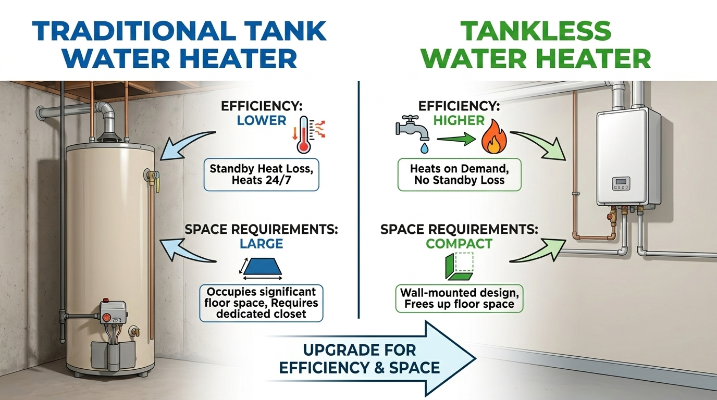
Tankless water heaters, commonly referred to as on-demand systems, heat water only when required, removing the necessity for storage tanks. These units heat water directly as it passes through, ensuring an unending supply unbound by the limitations of a traditional tank structure. A notable feature of tankless heaters is their flow rate capability, which defines the maximum hot water produced at any one time. While boasting a seemingly limitless supply of hot water with a reduced energy footprint, the effectiveness of these systems can fluctuate based on their flow rate capabilities.
Conversely, traditional storage-tank water heaters maintain a specific quantity of hot water, usually ranging from 20 to 80 gallons. They rely on recovery rates, indicating how rapidly they can reheat the stored water once it has been used. This results in the potential for cold showers if multiple appliances demand hot water concurrently.
Heating System Comparison: Cost, Efficiency, Performance, and Lifespan
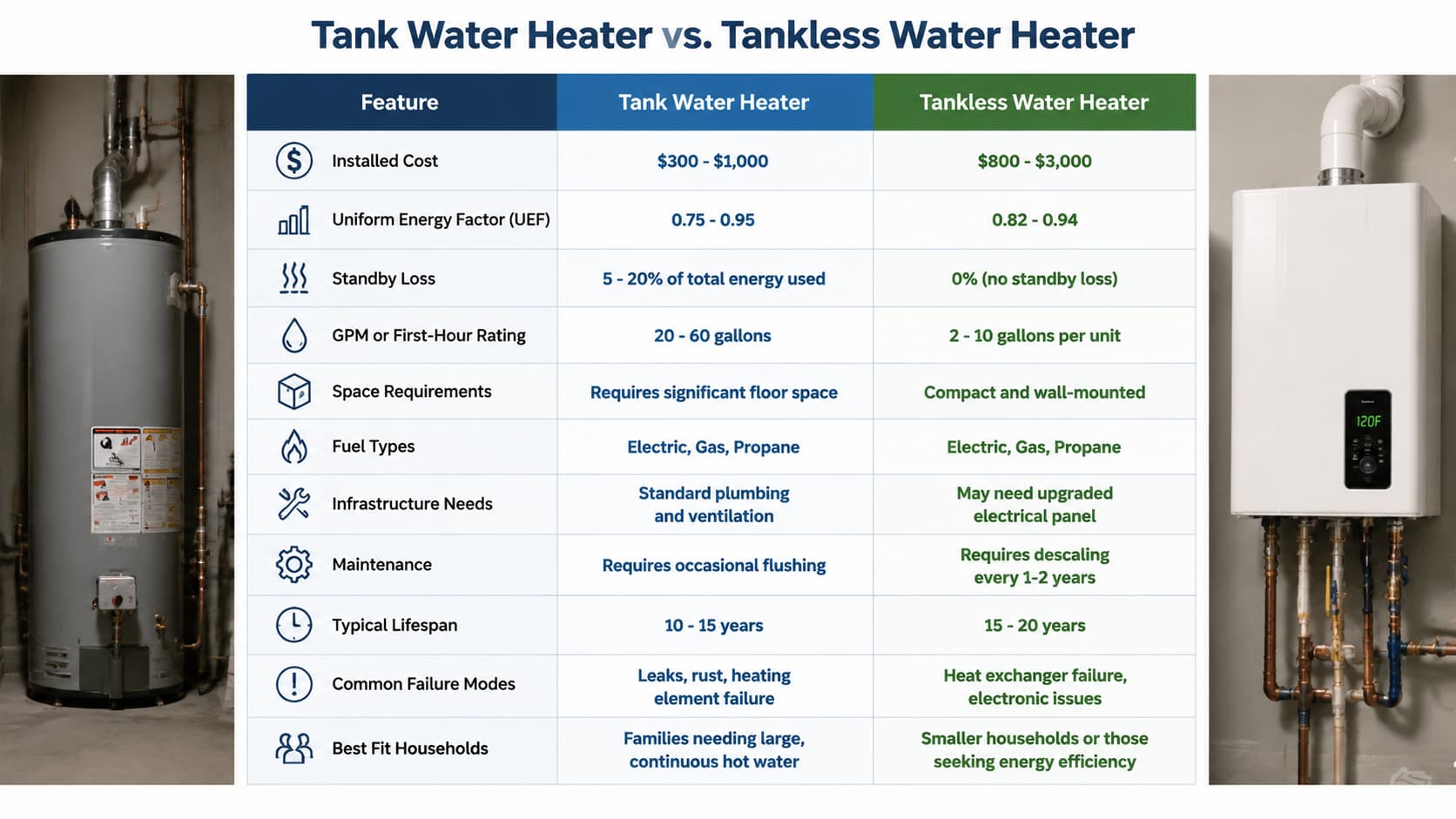
How to Choose the Right Water Heater Size for Your Home
Properly sizing tankless water heaters necessitates consideration of simultaneous fixture flow along with the required temperature rise to meet hot water needs effectively. For instance, in a household frequently using various hot water sources simultaneously—such as running a shower while using the dishwasher—calculating the total flow rate requirement becomes critical. A standard shower might require 2.5 gallons per minute (GPM), while a dishwasher typically consumes 1.5 GPM, resulting in a combined need of 4 GPM. Depending on the incoming water temperature and the desired output, it is crucial to select a tankless heater capable of adequate temperature rise to maintain consistent hot water delivery.
In contrast, tank models are sized primarily based on anticipated household demand, typically expressed through first-hour ratings. A family of four could benefit from a tank heater with a first-hour rating of at least 60-80 gallons, which ensures an adequate supply during peak use times, such as morning routines featuring multiple conversations involving showers, laundry efforts, and dishwashing. These ratings depict the total amount of hot water that can be utilized in the first hour, which is essential for satisfying household demands comfortably during periods of high consumption. Genuinely understanding a household's hot water usage patterns is vital for selecting an appropriate heater, aiding in the avoidance of cold showers and ensuring satisfaction when hot water is needed most.
Water Heater Installation Requirements: Space, Connections, and Setup
Both tank and tankless systems have distinct infrastructure requirements when considering water heater installation. Tank water heaters necessitate a designated location for installation, which is typically either a utility room or a basement, accompanied by relatively uncomplicated plumbing attachments. Homeowners must verify that the existing electrical supply aligns with the heater's specific amperage, generally around 240 volts for electric units, and ensure the installation site complies with local plumbing regulations concerning clearances and drainage requirements.
Conversely, tankless water heaters involve more intricate specifications. They often demand larger gas supply lines—typically 3/4-inch for models with high output—and adequate venting to safely expel exhaust. This frequently necessitates a separate venting system installation, posing a challenge in confined areas. Homeowners should also be cognizant of electric requirements; most tankless units require a 120-volt outlet for electronic controls in addition to power for ignitors.
Navigating the necessary permit process can also present obstacles; many local regulations demand safety and efficiency inspections for installations. Furthermore, if water hardness levels are high, implementing a water softener may be beneficial to prolong the lifespan of both units, requiring additional plumbing modifications.
Homeowners should prepare for such challenges during installation by consulting professionals to evaluate existing setups and obtaining the right permits to streamline the process.
Water Heater Maintenance, Hard Water Effects, and Long-Term Performance
The maintenance aspect is an important factor homeowners must not disregard when choosing between tankless and tank water heaters. Regular descaling is imperative for tankless systems, particularly if residing in hard water areas. Hard water consists of minerals that accumulate over time, negatively impacting unit efficiency and leading to potential failures. Homeowners should plan on descaling their tankless systems semi-annually or annually; neglect can lead to decreased flow rates and unexpected shortages of hot water during peak times.
Similarly, tank water heaters are not exempt from hard water issues, which can cause sediment buildup to occur inside the tank. This sediment not only shortens the appliance's lifespan but also contributes to potential hot water shortages, especially in larger households. Conducting regular flushing of the tank can mitigate these challenges, thus enhancing the unit's reliability.
Comfort plays a significant role in this decision-making process. While tankless systems can potentially deliver unlimited hot water, delayed delivery times can occur if multiple taps are in use at the same time; thus, the recovery rate becomes a critical consideration. In contrast, tank systems can supply hot water promptly, but they may deplete during significant usage intervals. To enhance both reliability and comfort, homeowners might consider installing water softeners to counteract hard water issues and utilizing timers on tank systems to ensure water is heated preemptively during peak usage hours. By implementing these precautionary measures, homeowners can improve both the performance and longevity of their water heating solutions.
How to Calculate the Total Cost of Owning a Water Heater
When assessing water heater options, comprehending the total ownership cost (TOC) is vital for homeowners as it encapsulates several critical elements impacting long-term investments.
- Equipment Costs: The initial expenditures greatly differ between tank and tankless water heaters. A traditional tank model may vary from $300 to $600, while a tankless option can range from $800 to $1,500.
- Installation Charges: Account for labor associated with installation, typically falling between $200 to $1,000. Tankless units often necessitate additional venting and electrical setups, inflating these installation costs.
- Infrastructure Upgrades: Depending on the plumbing and electrical framework of the home, infrastructure improvements may be necessary and could add $500 to $2,000 to total expenses.
- Energy Costs: Tankless systems generally offer enhanced energy efficiency, leading to potential reductions in monthly heating costs of around 20%. Owners might foresee annual savings around $100 with tankless models based on energy consumption.
- Maintenance and Repair Expenses: Costs for routine maintenance typically approximate $100 per year for tankless systems, whereas traditional tanks may require around $50 annually; however, the durability of tankless systems often results in reduced long-term repair needs.
- Financing Considerations: If the purchase is financed, interest rates and loan arrangements can dramatically influence total expenses.
- Potential Rebates: Many utility companies offer rebates for energy-efficient appliances, easing some initial costs, often encouraging the switch to tankless systems.
- Replacement Timelines: Tank water heaters typically have a lifespan of 10-15 years, in contrast to tankless options, which can last up to 20 years. Extended lifespans allow for ownership costs to be spread over a more extended period, facilitating more effective budget planning.
Understanding these various components allows homeowners to make informed decisions, determining the most economical and efficient water heating solution tailored to their unique needs.
Choosing the Right Water Heater for Your Household Needs and Contractor Checklist
When deliberating between tank and tankless water heaters, homeowners should consider their specific requirements. For large families, a tank water heater could be advantageous due to its ability to sustain hot water for simultaneous use. Conversely, frequent hot water users may prefer a tankless system, leveraging its ability to supply unlimited hot water as needed and its potential energy savings over time.
Checklist for Hiring a Contractor:
- Experience: How extensive is your experience in installing and servicing water heaters?
- Licensing: Are you properly licensed and insured for these installations?
- References: Can you provide recent endorsements from satisfied clients?
- Estimates: Do you provide written estimates?
- Specific Expertise: Can you demonstrate experience with both tank and tankless models?
Critical Questions:
- What system would you recommend for my household size and use frequency?
- How will you guarantee proper installation and optimal efficiency?
These tailored recommendations and the contractor checklist aim to help homeowners make knowledgeable decisions aligned with their unique scenarios.
Making an Informed Choice for Your Water Heating Needs
Deciding between tank and tankless water heaters demands careful thought and consideration. Homeowners are encouraged to evaluate their specific needs—like household size, hot water demand, and budget limitations—to identify the system best suited for them. While tankless heaters may conserve space and energy over time, traditional tank systems typically boast a lower upfront cost and a reliable supply. Ultimately, understanding the distinct advantages and limitations of each option enables homeowners to make an informed decision, enhancing their home's comfort while simultaneously promoting greater efficiency and savings. Taking time to assess one’s particular situation will lead to a well-considered choice, as the right water heater can significantly influence daily living experiences.