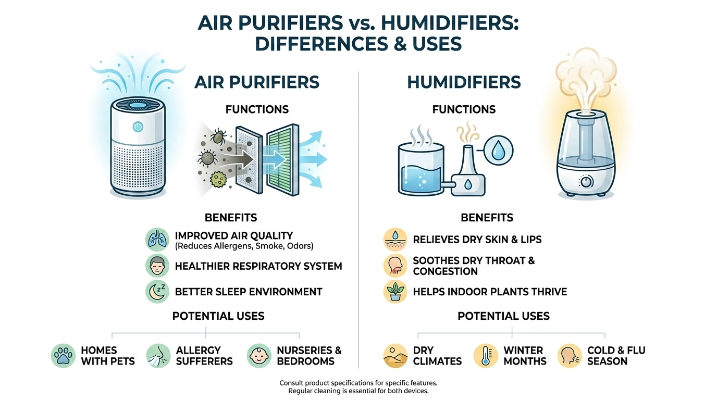
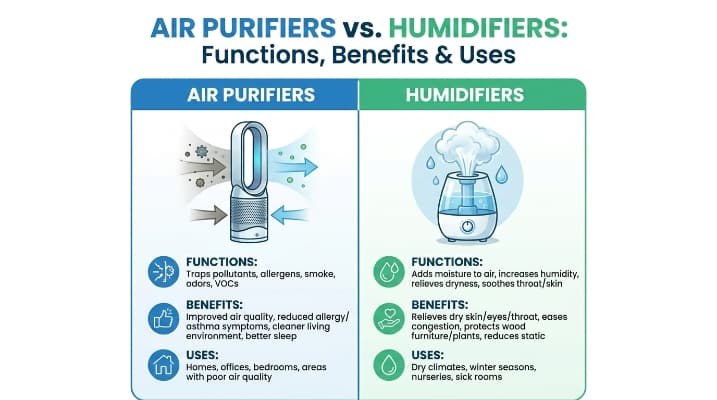
Air purifiers and humidifiers are vital appliances that significantly enhance indoor air quality. Air purifiers operate by filtering out harmful pollutants such as dust, pollen, smoke, and pet dander from the air, thus promoting a cleaner and healthier breathing environment. In contrast, humidifiers work to add moisture to the air, which helps alleviate dryness that can lead to skin irritation, discomfort, and respiratory issues. While both devices greatly improve indoor comfort, it's essential to recognize that they do not replace the need for proper source control, adequate ventilation, routine cleaning, or professional medical care. Understanding the specific functions of each device is crucial for making informed choices about creating healthier indoor spaces.
How Do Air Purifiers Work?
Air purifiers are expertly designed to enhance indoor air quality by effectively removing various types of pollutants and harmful particles from the air. Most air purifiers utilize a sophisticated multi-stage filtration system. The two most commonly used types of filters are HEPA (High-Efficiency Particulate Air) filters and activated carbon filters. HEPA filters are engineered to trap airborne particles, including dust mites, pollen, pet dander, and smoke, by utilizing a mechanical process that pulls air through a dense filter media. These filters can capture up to 99.97% of particles as tiny as 0.3 microns, making them particularly effective against allergens and particulate matter.
Activated carbon filters excel in adsorbing gases and odors. These filters contain a network of microscopic, porous spaces that attract and hold various chemical pollutants, including volatile organic compounds (VOCs) from household cleaning agents, as well as smoke and cooking odors. This combination of filters enables air purifiers to address a broad spectrum of indoor air contaminants.
However, it is important to acknowledge the limitations of air purifiers. A common misconception is that they can completely eliminate all indoor air pollution or serve as a substitute for adequate ventilation and source control. For example, while air purifiers enhance air quality, they cannot address the underlying causes of pollution, such as mold growth or emissions from household products. Furthermore, individuals with existing health conditions should consult healthcare professionals instead of relying solely on air purifiers, ensuring a comprehensive approach to managing indoor air quality concerns.
By understanding how air purifiers function, consumers can make educated decisions regarding which model best fits their needs, recognizing that while these devices enhance air quality, they do not offer an overarching solution to all indoor air issues.
What Is a Humidifier? Uses, Benefits, and How It Works
Humidifiers serve as essential devices designed to release moisture into indoor environments, addressing issues associated with overly dry conditions, such as dry skin, irritated sinuses, and breathing difficulties. There are two primary types of humidifiers: evaporative and ultrasonic.
Evaporative humidifiers operate based on a straightforward principle: a fan pulls air through a wet wick or filter, allowing moisture to evaporate into the air and effectively raising humidity levels. This type of humidifier naturally regulates humidity since the evaporation process slows down as the room's humidity increases.
Ultrasonic humidifiers, however, utilize ultrasonic vibrations to produce a fine mist of water droplets, which are then released into the air. These devices are generally quieter and more energy-efficient than evaporative models, making them popular choices for bedrooms and nurseries.
Both types of humidifiers provide effective solutions for dry air issues frequently experienced during colder seasons or when artificial heating systems are in use. However, proper maintenance of these devices is vital. Regular cleaning and the timely replacement of wicks or filters are crucial in preventing the growth of mold and bacteria, which could potentially aggravate health issues rather than alleviate them.
Despite their efficiencies, humidifiers come with their challenges; they may struggle with extreme humidity variations and could fail to evenly manage humidity levels in larger spaces. Committing to proper understanding and maintenance of humidifiers will significantly enhance their effectiveness in improving indoor air quality.
Making the Right Choice: Decision Tree for Air Purifier vs. Humidifier
When contemplating whether to employ an air purifier or a humidifier, users should assess multiple factors to make the best decision:
- Measured Relative Humidity: If humidity levels are less than 30%, a humidifier becomes essential to alleviate dry air effects. Conversely, if humidity exceeds 60%, an air purifier can help reduce the risk of mold and dust mites.
- Pollutant Sources: Identify the pollutants present in your environment. High pollen counts, smoke, or pet dander would suggest the need for an air purifier, while low allergen levels combined with dry air indicate a humidifier would be beneficial.
- Symptoms Experienced: Symptoms like a scratchy throat, static electricity, or respiratory discomfort signal the necessity for a humidifier. In contrast, if sneezing or coughing from allergens is prevalent, an air purifier is the appropriate choice.
- Room Size: Ensure that the device selected matches the dimensions of your room. A portable humidifier may be sufficient for smaller rooms, whereas larger spaces might require a more robust air purifier.
- Noise Tolerance: Air purifiers can be noisier due to their operational decibel levels. If noise is a significant concern, select a quieter model or favor a humidifier, which typically operates with lower noise levels.
- Maintenance Willingness: Air purifiers require regular filter replacements, while humidifiers need frequent cleaning. Choose based on your capability and commitment to device upkeep.
- Household Vulnerability Factors: Homes with individuals prone to respiratory issues, infants, or allergies should prioritize air purifiers to ensure the cleanliness of the air owing to the need for cleaner air quality.
By adhering to these considerations, users can effectively differentiate between an air purifier and a humidifier based on their specific indoor air quality challenges.
Choosing the Right Humidifier Size, Placement, Maintenance, and Running Costs
When selecting air purifiers and humidifiers, appropriate sizing is essential for their effectiveness. For air purifiers, aim for a Clean Air Delivery Rate (CADR) that correlates with the square footage of your room. A unit with a CADR of 150-250 is suitable for spaces up to 300 square feet, while larger units with a CADR exceeding 300 cater to expansive areas. For humidifiers, it is crucial to maintain optimal humidity levels (30-50%). For smaller rooms (up to 400 sq. ft.), a unit with a capacity of 1-3 gallons suffices, while larger spaces may necessitate a 4-6 gallon-capacity model.
Placement is equally important for both devices—position air purifiers at least a foot away from walls and furniture to ensure unobstructed airflow. Humidifiers should be centrally located within the room, avoiding drafts and cold surfaces to facilitate even humidity distribution.
Routine maintenance, such as changing filters for air purifiers every 3-6 months, will enhance their performance, while humidifiers require descaling and filter replacements to prevent mold. Operating costs vary with air purifiers typically ranging from $30 to $100 annually on energy consumption, whereas humidifiers often incur costs of $20 to $50, depending on usage and model efficiency. Understanding these details ensures optimal indoor air quality and prolongs the lifespan of your devices.
Humidifier Safety: Maintaining Healthy Indoor Humidity Levels
Maintaining suitable indoor humidity levels is essential for overall health and wellbeing. The U.S. Environmental Protection Agency (EPA) recommends keeping indoor humidity within the 30% to 50% range. Exceeding these levels can foster environments conducive to mold and dust mite proliferation, which can exacerbate allergies and respiratory issues. Research shows that mold can generate allergens and irritants as well as mycotoxins, leading to negative health outcomes, particularly amongst sensitive groups like children and the elderly.
Effective management of humidifiers is crucial in addressing humidity-related concerns. It is necessary to clean these devices regularly following the manufacturer’s instructions to prevent bacteria and mold growth inside the unit. Additionally, it is essential to avoid over-humidifying the space; using a hygrometer can assist in effectively tracking moisture levels.
When considering humidity control devices, caution is warranted with products that produce ozone. Many air purifiers claiming to generate ozone may inadvertently contribute to indoor air pollution, as the EPA has indicated that ozone can irritate the lungs and worsen pre-existing respiratory conditions. Therefore, consumers should select humidifiers and purifiers that do not emit ozone or adhere to recognized safety standards.
In summary, while maintaining optimal humidity is crucial for enhancing indoor air quality, following manufacturer guidelines, monitoring humidity levels, and avoiding ozone-producing devices are key actions needed to establish a healthy living environment.
Air Purifier Buying Checklist: Features to Evaluate Before Buying
Recognizing the distinctions between air purifiers and humidifiers is vital for enhancing indoor air quality. Air purifiers effectively filter out allergens and pollutants, while humidifiers infuse moisture into arid air, fostering respiratory well-being. Assess your individual needs: if allergens or asthma are concerns, choose an air purifier equipped with HEPA filters; if humidity levels are insufficient, consider a humidifier as an ideal solution.
Purchase Checklist:
- Identify specific needs: Do you need to combat allergies, dry air, or both?
- Choose the right type: Should you select an air purifier, a humidifier, or perhaps a combination of both?
- Check filter types: Are you considering HEPA, activated carbon, or other specialized filters?
- Evaluate room size: Ensure that the device’s capacity is in alignment with your space requirements.
- Review health and safety guidelines: Look for those that maintain low noise levels, energy efficiency, and safety of materials used in construction.