Understanding the differences between heat pumps and furnaces is crucial for homeowners seeking efficient heating solutions. In an era where energy efficiency is increasingly vital, many find themselves evaluating which option is best suited for their specific needs. This comparison of heat pumps and furnaces delineates unique features, analyzing factors such as costs, efficiency, and performance. While both systems aim to create a comfortable living environment, individual circumstances — like location, climate, and financial constraints — significantly influence the ideal choice. Exploring both systems' merits and drawbacks, this article assists readers in navigating their heating options effectively.
How Different Heating Systems Work
Heat pumps and furnaces function as distinct systems for regulating temperature within homes, and understanding their operational differences can help homeowners make informed decisions.
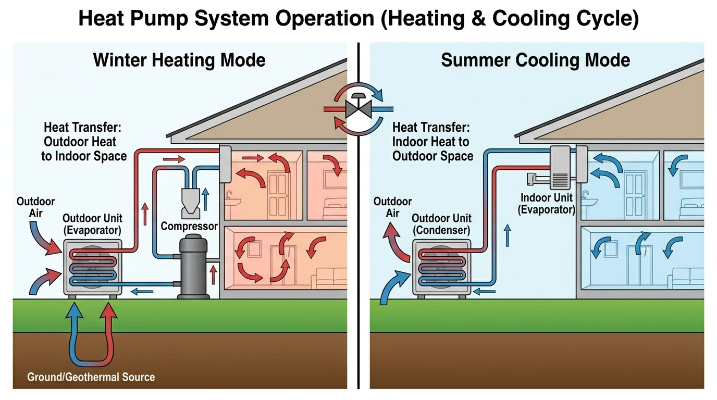
A heat pump operates by transferring heat rather than generating it, utilizing a refrigeration cycle. During winter months, it extracts heat from the outdoor air or the ground, even at lower temperatures, and pushes this warmth indoors to raise the home's temperature. In warmer seasons, it can reverse this process, providing efficient cooling. This dual functionality makes heat pumps a versatile year-round climate control solution.
Conversely, a furnace generates heat through the combustion of fuels (such as natural gas, oil, or propane) or electric resistance. The heated air is then circulated throughout the home. Furnaces are specifically designed for heating and require a separate air conditioning system for cooling needs, emphasizing their singular focus on heating mortality.
Moreover, seasonal efficiency ratings reflect different performance dynamics. Heat pumps tend to demonstrate greater energy efficiency in moderate climates, while furnaces may be more effective in extremely cold conditions. By understanding these fundamental differences, we set the stage for a comprehensive comparison of the costs, efficiency, and performance of heat pumps and furnaces.
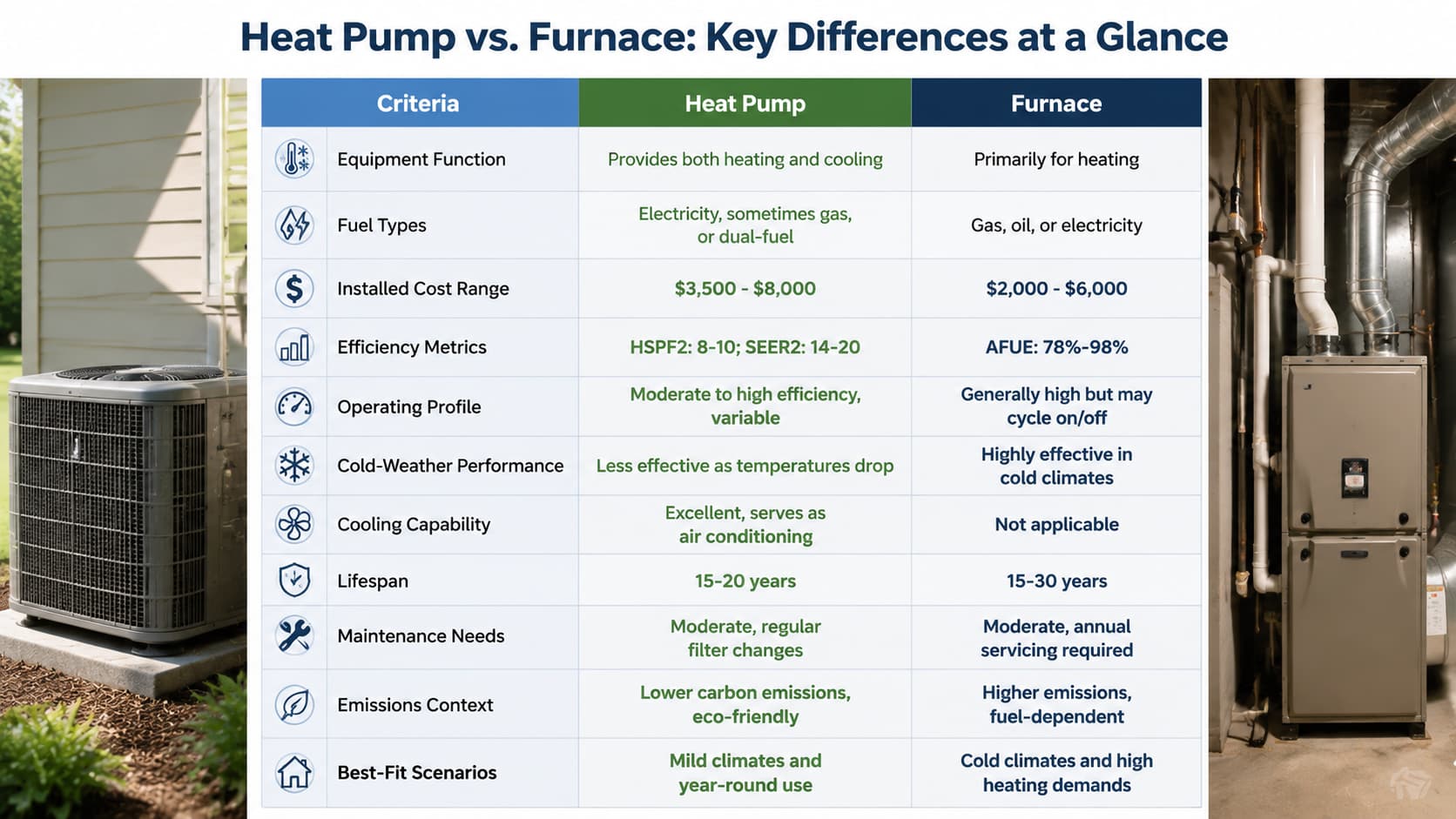
This comparison table helps delineate differences between heat pumps and furnaces. Homeowners can evaluate which heating system suits their needs best based on their local conditions.
Choosing Heating Systems for Different Climates and Cold-Weather Conditions
Climate conditions play an essential role in determining the effectiveness of heat pumps and furnaces as heating systems. Heat pumps operate efficiently in moderate climates, extracting heat from the outside air. However, their performance can decline drastically in colder regions, especially when temperatures drop below freezing. In extreme cold conditions, heat pumps may struggle to provide adequate warmth, which leads to heightened energy consumption and dependency on auxiliary heating systems.
On the other hand, furnaces — particularly those running on gas or oil — excel in colder climates because they produce heat through fuel combustion. This means they deliver consistent and reliable warmth, regardless of outdoor temperatures. Homeowners in regions where winters result in substantial snowfall should strongly consider furnace systems for uninterrupted comfort.
For those residing in milder climates, heat pumps prove to be an effective and energy-efficient option. However, those in areas experiencing harsh winter conditions must carefully assess a heat pump’s limitations against the reliable performance of a furnace. Key considerations include installation costs, energy efficiency, and long-term viability. It is also vital for homeowners to evaluate insulation quality, house orientation, and energy resource availability in their specific location to make an informed choice.
How to Calculate Heating System Operating Costs
To accurately assess heating operating costs, homeowners should follow a structured methodology considering several critical factors:
- Determine Annual Energy Needs: Estimate the total energy required for heating your home throughout the year. A review of past heating bills or utilizing online energy calculators can help in this assessment.
- Gather Local Electricity and Fuel Prices: Check current electricity rates via your utility provider and inquire about heating oil or gas costs from local suppliers. These rates can significantly differ and impact total expenses.
- Assess System Efficiency: For heat pumps, evaluate the Coefficient of Performance (COP), where a higher COP indicates greater efficiency. For furnaces, examine the Annual Fuel Utilization Efficiency (AFUE) rating.
- Include Maintenance and Replacement Costs: Factor in annual maintenance costs—typically ranging from $150 to $300 for heat pumps and similar amounts for furnaces. Additionally, the replacement timeline is generally 15-20 years for most heating systems, affecting ongoing financial commitments.
Home Factors to Consider When Choosing a Heating System
The choice between a heat pump and a furnace hinges extensively on a home's current infrastructure. One crucial aspect to consider is ductwork. Homes with existing ducted systems can accommodate furnaces, which necessitate specific exhaust venting for combustion byproducts. Heat pumps, while they can leverage existing ducts, rely heavily on adequate airflow to run efficiently; therefore, duct size and condition are critical.
Electrical service requirements are also important; heat pumps typically require dedicated circuits capable of supporting higher amperage compared to furnaces. Furthermore, gas furnaces must have appropriate gas lines and exhaust venting to ensure safety, whereas heat pumps have essential requirements for refrigerant management, including sufficient outdoor unit placement.
In terms of comfort, heat pumps can provide stable temperatures but may become inefficient in exceptionally low temperatures. Conversely, furnaces excel at delivering rapid heating. Maintenance demands differ as well; heat pumps often need regular filter changes and coil cleaning, while furnaces require flue inspections and regular filter changes. Understanding these infrastructure factors is essential for homeowners to make an educated decision regarding their heating solution.
Choosing Between Heat Pumps, Furnaces, and Dual-Fuel Systems
When considering a heating system, homeowners must evaluate their unique circumstances to guarantee optimal comfort and efficiency.
- Heat Pumps: Highly suitable for moderate climates, these systems provide energy efficiency and reduced operational costs, especially in warmer regions. They efficiently heat residences using electricity, marking them as a greener alternative to fossil fuels. If your locality sees more than 30% of winter temperatures above freezing, a heat pump becomes an economically viable choice.
- Furnaces: In colder regions where frigid temperatures are common, a furnace can be a superior option. It efficiently extracts heat from the air and continues functioning well under extreme cold. Households with larger spaces or those poorly insulated may find a furnace offers the most consistent heating solution.
- Dual-Fuel Systems: For those seeking maximum flexibility, a dual-fuel system integrates a heat pump with a gas furnace. This setup is particularly beneficial for areas experiencing notable temperature fluctuations, as it allows homeowners to transition between systems based on energy prices and external temperatures, optimizing efficiency and minimizing costs.
Selecting the appropriate heating system requires mindful appraisal of climate conditions, operational efficiency, and cost, ensuring warmth while managing energy expenditures.
Professional Installation Checklist: Sizing, Safety, Rebates, and Contractor Quotes
When it comes to the installation and maintenance of heating systems, hiring a qualified contractor is vital. Proper sizing calculations ensure that the system operates efficiently, catering to your home's specific heating requirements; both undersized and oversized systems can cause excessive energy costs and inhabit comfort.
Safety is paramount in installations involving combustion, such as gas furnaces. Homeowners should mandate thorough inspections to prevent the dangers of carbon monoxide exposure, which can be fatal. This emphasizes the importance of selecting a contractor who prioritizes compliance with local regulations and rigorous safety checks.
To streamline the decision-making process, keep this checklist handy when soliciting quotes:
- Verify contractor credentials and experience.
- Ask for appropriate sizing calculations.
- Request references related to combustion safety evaluations.
- Research any local incentives for energy-efficient systems.
- Compare at least three quotes to ensure competitive pricing and service options.
By being informed and diligent, homeowners can significantly enhance their heating system experience, ensuring safety and efficiency throughout.
Heat Pump vs Furnace: Which Heating System Is Right for You?
Heat pumps and furnaces each offer advantages depending on where you live and how your home is designed. Heat pumps are often ideal for moderate climates and homeowners seeking heating and cooling in one system, while furnaces may provide stronger performance in regions with extreme winter temperatures.
The right choice depends on more than the equipment itself. Factors such as installation costs, energy prices, maintenance needs, and available rebates should all be considered before making a decision.
Understanding these differences allows homeowners to choose a heating solution that matches their comfort needs, budget, and long-term energy goals.