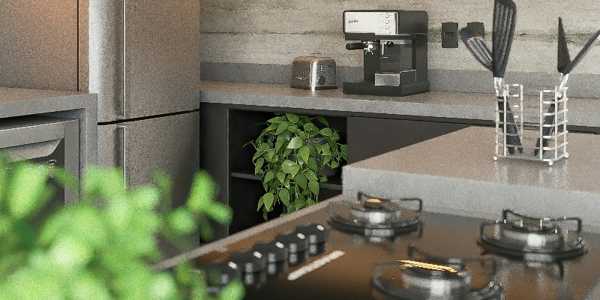
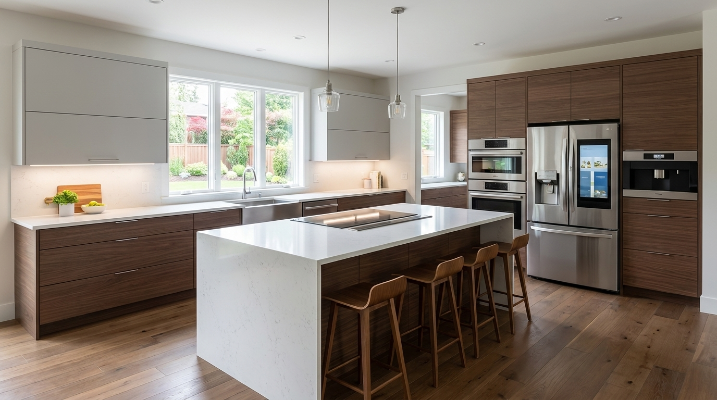
Kitchen storage is a defining element that impacts both functionality and aesthetics. A well-organized kitchen not only enhances the inviting atmosphere of the space but also promotes efficiency during meal preparation, making cooking a much more pleasurable task. On the other hand, inadequate storage solutions can lead to clutter and disorganization, commonly faced issues in many kitchens today. Limited space can morph an otherwise functional area into a source of frustration, with essential utensils and ingredients easily misplaced among a chaotic environment. This article strives to tackle these frequent kitchen challenges by providing structured and effective strategies aimed at maximizing kitchen space. Readers will discover practical storage techniques designed to transform their kitchens into organized havens, reducing chaos and streamlining daily cooking tasks. Prepare to explore purposeful storage solutions that foster harmony in your culinary space!
Understanding Kitchen Storage Problems
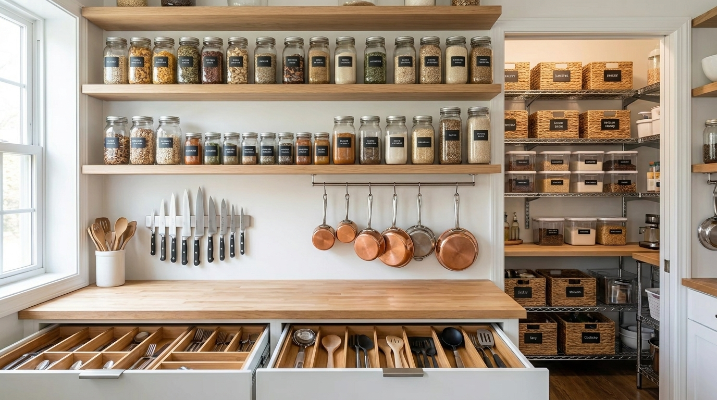
A well-organized pantry saves time, reduces food waste, and makes everyday cooking more efficient. Kitchens are often regarded as the heart of the home; however, they can easily devolve into hubs of clutter and chaos. Studies indicate that nearly 60% of homeowners feel overwhelmed by their kitchen organization, pinpointing clutter and inefficiency as the main contributors to their struggles. Common problems such as limited space, disorganized items, and ineffective utilization of available storage significantly disrupt a seamless cooking experience.
Inefficient storage leads to items becoming misplaced or forgotten, exacerbating accessibility issues. Many kitchen designs overlook optimal functionality, resulting in scattered food and utensils that make finding essentials a challenge. Surprisingly, the average kitchen has the potential to hold up to 25% more when space is utilized effectively, yet numerous homes fail to take advantage of vertical storage and hidden compartments.
Organizing your kitchen transcends mere tidiness; it directly influences efficiency, safety, and overall culinary enjoyment. By fostering an accessible organization, not only is time saved, but the entire cooking experience is elevated. With household sizes expanding and an increasing number of individuals embracing home cooking, efficiently addressing these storage challenges has never been more pressing.
In essence, understanding and solving kitchen storage dilemmas can pave the way for a more enjoyable and efficient cooking environment, underscoring the vital role of effective organization in our everyday lives.
A Systematic Approach to Kitchen Storage
To effectively tackle kitchen clutter, adopting a systematic approach to organization is vital. Implementing a well-structured storage strategy can transform a disorganized kitchen into a highly functional workspace. At the core of this process are key categories: cabinets, countertops, pantry, and various storage zones.
Cabinets function as the backbone of kitchen storage, housing dishes, cookware, and appliances. To maximize their potential, it’s essential to utilize vertical space through shelving and organizers that keep items accessible but out of sight. Countertops must remain functional and free from clutter, serving as preparation zones while only displaying frequently used tools. A clean kitchen always looks better, but thoughtful decor upgrades can make it feel even more welcoming. The pantry is crucial for organizing dry goods and condiments, ensuring that everything is visible and easily reachable. Lastly, additional storage solutions, like drawer organizers and bins, help manage miscellaneous items, significantly enhancing overall organization.
This structured approach directly addresses prevalent kitchen challenges, such as limited space and the difficulty of locating essential items, by strategically categorizing various objects. Establishing this organized framework enables homeowners to create clean and efficient kitchens, setting the stage for sustainable cooking and entertaining.
Throughout this article, this systematic method will be explored in greater detail, providing readers with actionable insights for each category.
Efficient kitchen storage is pivotal for creating a functional and organized cooking space. Below is a systematic six-step process to turn your kitchen storage challenges into effective solutions.
Step 1: Assessing Your Current Kitchen Layout
Start by measuring the available space in your kitchen. Identify clutter-prone areas and take note of particularly cramped zones. Make a comprehensive list of all items requiring storage and factor in your functionality needs. This assessment serves as the foundation for developing an organized kitchen.
Step 2: Declutter and Prioritize Needs
Next, confront the clutter head-on. Review your kitchen items and determine what is truly essential. Differentiate between regularly used items and those that can be discarded or donated. This process not only clears out unnecessary items but also enables you to prioritize your storage requirements based on what you wish to keep.
Step 3: Categorization of Items
Once clutter is minimized, it's time to categorize. Group similar items together; for instance, kitchen utensils, dry goods, and appliances should reside in designated zones. This organization streamlines access and improves kitchen efficiency, rendering cooking a more enjoyable pursuit.
Step 4: Choosing the Right Storage Solutions
Now, it’s time to select appropriate storage solutions tailored to your kitchen style and specific needs. Explore various options like shelves, bins, or drawer organizers. Open shelving may provide a modern aesthetic and easy accessibility, while closed cabinets help maintain a streamlined look at the cost of visibility. Evaluate your kitchen’s design alongside the benefits of each option to determine what fits best.
Step 5: Implementing the Solutions
With storage solutions at hand, it’s time to implement them effectively. Arrange items to maximize available space, installing shelves at varied heights to cater to different items. Vertical storage should be utilized for pots and pans, and clear labeling on containers enhances easy identification, ensuring each item finds its proper place.
Step 6: Maintaining an Organized Kitchen
Finally, commit to maintaining your organized kitchen with regular upkeep. Set aside time weekly or monthly for further decluttering and reassessing storage effectiveness. This ongoing vigilance lets you pinpoint successful strategies and areas needing improvement for a continually organized space.
By enacting these steps, you can revolutionize your kitchen storage and enhance its overall usability. Begin now and take back your kitchen space!
Breakdown of Key Materials and Tools
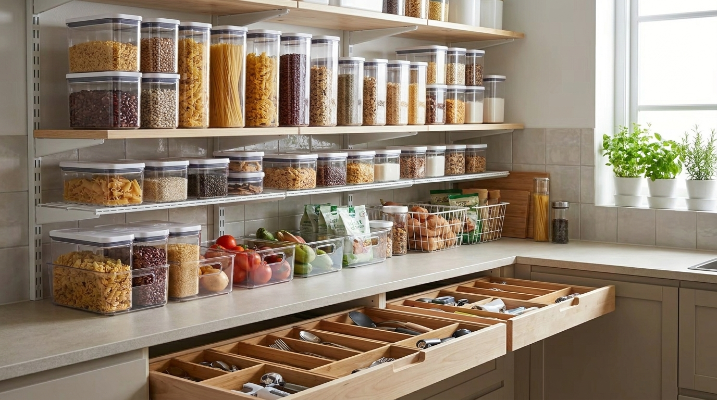
To optimize kitchen storage, investing in the right materials and tools is vital. Start with adjustable shelving units that offer flexibility in height and can accommodate various items for maximum utilization of vertical areas. For containers, prioritize airtight glass or BPA-free plastic options that preserve food freshness and minimize mess. Opt for stackable designs, as they save space while granting easy access to contents. Organized kitchens begin with cabinets that offer reliable storage and long-lasting performance.
Drawer organizers featuring dividers or expandable trays are excellent for utensils and tools, helping to separate items for quick identification and use. When selecting materials, prioritize durability and functionality — high-quality options made from stainless steel or heavy-duty plastic will endure the demands of a busy kitchen better than low-cost alternatives. It’s also wise to choose containers that seamlessly fit into existing spaces, ensuring every inch of your kitchen remains functional and visually appealing.
Actionable Formula for Continued Kitchen Maintenance
For ongoing kitchen organization success, consider adhering to the 80/20 rule: dedicate 80% of your storage to items you use only 20% of the time. This principle streamlines storage and aids in prioritizing everyday essentials. Moreover, set a reminder to evaluate your kitchen storage every six months. During this review, assess which items remain in active use and which contribute to clutter. This proactive strategy ensures your kitchen maintains efficiency and functionality, staving off a return to disarray while allowing for necessary adjustments as your cooking habits change.
Transform Your Kitchen Today
In summary, employing a structured approach to maximize kitchen storage is crucial for enhancing not just functionality but also the overall pleasure of cooking and meal preparation. By integrating the solutions we discussed, including utilizing vertical space and implementing thoughtful storage systems, you can dramatically reduce clutter and create an efficient workspace. These strategies do more than declutter your kitchen; they also facilitate easier access to the tools and ingredients you rely on. The time for action is now — transform your kitchen into a well-organized haven that reflects your culinary style and efficiency. Embrace these tips today for a more functional kitchen tomorrow!