When it comes to safeguarding your home from the latent threat of fire, ensuring proper smoke detector placement is crucial. According to the National Fire Protection Association (NFPA), it is essential to install smoke alarms in every sleeping area and on every level of the home, including the basement. This guideline not only meets safety standards but significantly enhances your chances of survival in a fire emergency. Alarmingly, statistics reveal that nearly 60% of fire-related deaths occur in homes lacking functioning smoke alarms. An effective alarm system acts as an early warning system, granting inhabitants precious moments for escape during a fire incident. By understanding the optimal locations for smoke detectors, homeowners can adopt a proactive stance toward safeguarding their families. This article explores effective strategies for smoke alarm installations while also addressing common placement mistakes that could jeopardize household safety.
What Is a Smoke Alarm and How Does It Work?
1.1 Smoke Alarm vs. Smoke Detector
It’s imperative to distinguish between smoke alarms and smoke detectors as they serve crucial yet different functions in home safety. A smoke alarm is a comprehensive device that not only detects smoke but also emits an audible alarm to alert residents of danger. Conversely, a smoke detector is merely a component that senses smoke and generally requires an external alert system to notify individuals. For instance, once a smoke detector identifies smoke particles from a fire, it activates a connected alarm, which may be part of a broader fire monitoring system. Recognizing these distinctions is vital in selecting the appropriate safety equipment for your household.
1.2 Heat Alarms and Carbon Monoxide Alarms
In addition to smoke alarms, heat alarms and carbon monoxide (CO) alarms are essential for comprehensive home safety. Heat alarms function by detecting rapid increases in temperature, thus providing extra protection in areas like kitchens where smoke may be commonplace. Carbon monoxide alarms are crucial for identifying harmful concentrations of this colorless, odorless gas, which poses significant health risks. Installing CO alarms near sleeping quarters and frequently used areas enhances safety, providing early warnings that can prevent potential tragedies. Together, these devices create a formidable fire safety strategy while ensuring compliance with safety guidelines.
How Many Smoke Alarms Do You Need? A Simple Calculation Guide
To ascertain the minimum number of smoke alarms necessary for your home, adhere to this straightforward formula: 1 alarm for every level of the home + 1 alarm in each bedroom + 1 alarm in separate sleeping areas.
- Count Levels: Include all levels, encompassing basements or attics designated for habitation.
- Count Bedrooms: Ensure every bedroom is equipped with a properly functioning alarm.
- Separate Sleeping Areas: For additional rooms utilized for sleeping beyond the main bedrooms, incorporate those into your total.
Once these values are tabulated, you will have a preliminary count of the alarms required. For instance, in a two-story house featuring three bedrooms and one additional sleeping area:
- Levels: 2
- Bedrooms: 3
- Separate Sleeping Area: 1
- Total Count: 2 + 3 + 1 = 6 alarms.
By modifying this formula to suit your home’s specific layout, you can accurately gauge your smoke alarm requirements, ensuring compliance with NFPA guidelines.
Where to Install Smoke Alarms in Your Home
3.1 Room and Level Distribution
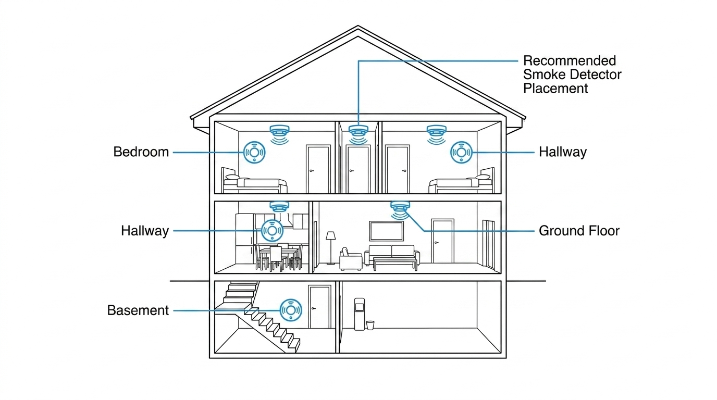
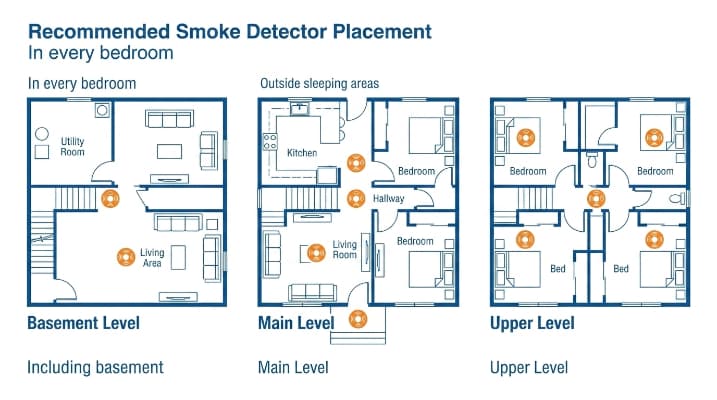
To optimize the effectiveness of smoke alarms throughout your residence, consider the following placement recommendations:
- Bedrooms: Install smoke alarms inside every sleeping area, ensuring that all occupants, including children, can hear them while asleep.
- Living Areas: Position alarms in hallways and living rooms adjacent to sleeping rooms, ideally within ten feet of bedroom doors.
- Levels of the Home: In multi-story residences, make certain that at least one smoke alarm is affixed to each level, including the basement.
By adhering to these recommendations, you’ll substantially mitigate the risk of injury or fatality in a fire scenario.
3.2 Ceiling Types and Special Scenarios
Certain residences necessitate unique smoke detector placements due to specific configurations.
- Split-Level Homes: Alarms should be mounted at the top of split levels, ensuring they are no further than ten feet from the bedrooms.
- Attics: For those that have attics converted into living or storage spaces, smoke alarms should be placed in these areas with at least three feet clearance from any walls or appliances to minimize false alarms.
By following these recommended practices, homeowners can cultivate a responsible and effective fire safety strategy that protects their properties.
Common Smoke Alarm Placement Mistakes and How to Avoid Them
In their efforts to install smoke alarms, homeowners often neglect critical guidelines, which can lead to ineffective fire safety measures. Common errors include positioning alarms too close to kitchens, leading to nuisance alarms from customary cooking activities. Locations near windows, doors, or ducts should also be avoided, as drafts may impair functionality. Installing alarms in poorly ventilated spaces can further lead to inaccurate readings.
To mitigate nuisance alarms, designate one smoke alarm specifically for kitchen regions, utilizing models engineered to minimize false alerts. Regular maintenance, including cleaning smoke alarms to prevent dust accumulation, is crucial in ensuring they remain effective. Additionally, replace batteries annually and conduct monthly tests to confirm operational efficiency. Placing alarms in hallways outside bedrooms and on each floor enhances safety while ensuring effective early warnings during fire incidents.
Taking these precautions guarantees that smoke alarms are reliable and proficient in protecting your home.
5.1 Importance of Interconnected Systems
Interconnected smoke alarms offer an important layer of safety in a household. This system ensures that if one alarm detects smoke or fire, all alarms sound simultaneously. Such rapid notification allows residents to respond quickly, potentially saving lives and minimizing property damage. For example, in a multi-level house, if a fire breaks out in the basement while family members are asleep upstairs, interconnected alarms will alert all residents without delay, significantly enhancing overall safety. This collective communication between devices creates a networked fire safety approach, which is particularly important in larger homes where sound may not travel effectively.
5.2 Battery-Operated vs. Hardwired Systems
When deliberating between battery-operated and hardwired smoke alarms, various factors warrant consideration. Battery-operated units provide flexibility in placement, as they do not require electrical access, making them ideal for renters or older homes. However, they necessitate regular battery checks and timely replacements. In contrast, hardwired smoke alarms are directly connected to the home’s electrical system, offering a constant power supply and frequently incorporating backup batteries. Although these may demand professional installation, they usually require less maintenance over time. Regardless of the chosen system, consistent testing and ensuring battery replacements at least once a year are fundamental for maintaining safety.
Smoke Alarm Placement Examples for Different Home Layouts
6.1 Smoke Alarm Placement in Single-Story Homes
In single-story homes, install smoke alarms within each sleeping area, outside each separate bedroom, and on every level. Place alarms on ceilings or high on walls, ideally at least four inches from the nearest wall to reduce false alarms and enhance detection effectiveness.
6.2 Arrangements for Multi-Story Homes
For multi-story homes, ensure smoke alarms are fitted inside each bedroom and on every level, including basements. Position them in hallways to connect sleeping areas effectively, with the preference of mounting them on ceilings or within one foot of ceilings for optimal smoke detection.
6.3 Accommodating Mobile Homes and Residents with Hearing Impairments
Mobile homes mandate strategic smoke alarm placement due to often open floor plans that can disrupt sound distribution. Install alarms in each room and common area, ensuring they are interconnected. For those with hearing impairments, strobe light alarms or bed shakers that activate with the smoke alarm should be considered. These alternatives are vital in providing an effective alert system that ensures safety and accommodates diverse needs. Furthermore, tactile alert systems can prove beneficial during nighttime hours when residents are asleep, ensuring timely awakening during alerts.
Smoke Alarm Safety Requirements and Expert Tips
Adhering to local building codes regarding smoke detector placements is paramount for ensuring home safety. These regulations exist to protect residents and facilitate effective fire responses. Homeowners should engage with local fire departments and experienced contractors for insights on optimal smoke detector positioning tailored to their unique home layouts. This collaboration refines safety measures and promotes awareness of area-specific risks.
Moreover, hiring qualified electricians for installation is essential. Professionals are adept at following electrical codes and safely installing detectors per safety standards set by reputable organizations like the NFPA. Thorough research is vital—for referrals and credential checks before proceeding. As you plan your smoke alarm installations, ensure familiarity with local regulations, taking proactive steps to prioritize safety in your home.
Maintaining Smoke Alarm Safety Over Time
Proper smoke alarm placement is only the first step in creating a safer home environment. Regular testing, maintenance, and family preparedness help ensure that alarms continue to work effectively when they are needed.
Use these key practices to maintain reliable protection:
- Install smoke alarms on each level of your home and near sleeping areas according to local safety requirements.
- Test alarms regularly to confirm that sensors and warning sounds are working properly.
- Replace batteries or power sources according to manufacturer recommendations.
- Replace smoke alarms when they reach the end of their recommended service life.
- Create and practice a home fire escape plan so everyone knows how to respond during an emergency.
A well-maintained smoke alarm system combines proper placement, regular checks, and household awareness. By following these steps, homeowners can improve fire preparedness and maintain a safer living environment over time.